Surface Tension: How to Keep a Console Table Curated, Not Cluttered
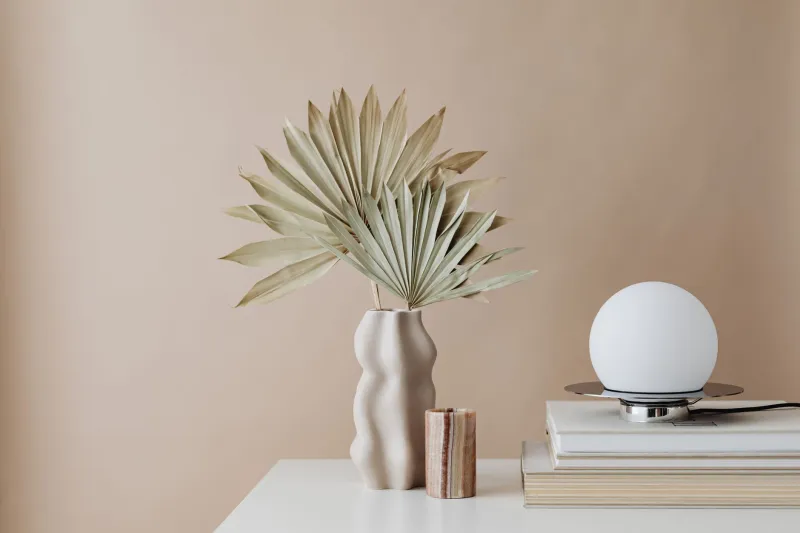
The console table has a split personality. In photographs, it is a calm composition of books, a lamp, and one well-placed bowl. In real life, it is where the mail lands, where the keys go, where someone drops a tote bag and a half-finished water glass. The table is not the problem. The problem is that we ask it to be both a display surface and a landing strip, then act surprised when it looks like a lost-and-found bin.
The solution is not to buy another basket. It is to give the table a smaller, clearer job. Think of it as a one-meter styling zone: a single stretch of surface—about 39 inches—where the composition actually happens. Everything outside that zone has to earn its place or move along.
Why one meter works
A console table can be six feet long, but the eye does not read the whole thing at once. It reads a cluster. When you style the entire length, you end up with a parade of objects that compete for attention. When you style one meter, you create a focal point with breathing room on either side.
That does not mean the rest of the table is empty. It means the rest of the table is quiet. A lamp at one end and a low bowl at the other can frame the zone without filling it. The middle meter is where the story happens: a tray, a stack of books, a small object with some weight, maybe a candle or a bud vase. The negative space is not wasted. It is what makes the curated part look curated.
Proportion before pretty
The first mistake is scale. A tiny vase on a big table looks like a punctuation mark that wandered off. A massive lamp on a narrow console can swallow the whole entry. Before you arrange anything, check the height and depth of the table against the wall. The tallest object should generally be no more than one and a half times the height of the table, and the deepest object should leave at least a few inches of usable surface in front of it.
A good console composition usually has three heights: a tall anchor, a medium layer, and a low layer. The tall anchor can be a lamp, a sculpture, or a leaning mirror behind the table. The medium layer is often a stack of books or a tray with a candle. The low layer is a bowl, a small dish, or a flat object that grounds the arrangement. If everything is the same height, the table looks like a shelf. If everything is tall, it looks like a display window.
Use a tray as a boundary, not a catchall
A tray is the best tool for keeping a console table from collapsing into clutter, but only if you treat it as a boundary. The tray should hold a small, edited group: a dish for keys, a candle, maybe a small vase. It should not become a shallow drawer for receipts, sunglasses, and three kinds of hand cream.
Choose a tray with a little weight and a finish that contrasts with the table. A dark wood tray on a pale console, or a woven tray on a dark wood top, gives the eye a clear place to land. Keep the tray in the one-meter zone, not at the far edge where it becomes a random island. The tray is the composition's anchor, not its junk drawer.
Books are structure, not storage
Books on a console table work best when they look like they were chosen, not deposited. Two or three horizontal stacks are usually enough. Mix sizes and spine colors, but keep the stacks low enough that they do not block the view of what is behind them. A stack of art books can be a base for a small object; a single large book can be a clean plinth for a bowl.
Avoid using the table as a bookshelf overflow. If the books are there only because you have nowhere else to put them, the arrangement will read as storage. If they are there because the covers are good and the titles mean something, they will read as collection.
Light the surface, not the ceiling
A console table in an entryway or living room often sits in a dim spot. A small lamp does more than make the surface usable; it gives the arrangement a warm center. Choose a lamp with a shade that does not overwhelm the table, and use a warm bulb—around 2700K—so the light feels residential rather than surgical.
If the table is in a hallway with no outlet, a rechargeable picture light or a slim cordless lamp can work. Just keep the cord situation clean. A visible tangle of cords will undo the calm faster than any clutter.
The daily reset is the real styling tool
A console table does not stay curated by accident. It stays curated because someone resets it. The habit can take three minutes: put the mail in a folder, return the keys to the tray, straighten the books, and remove anything that does not belong in the one-meter zone. Do it at the same time every day—after dinner, before bed, whenever the house slows down.
The reset works best when there is a clear home for the things that tend to land there. A hook for bags, a drawer for keys, a mail slot or basket near the door. If the table is the only available surface, it will keep doing the job of a mudroom. Give the clutter somewhere else to go, and the table can go back to being a composition.
Edit for the season, not the sale
A console table does not need a full restyle every month. But it should change enough to feel alive. In fall, a small brass bowl and a dark candle can warm the surface. In summer, a clear glass vase and a linen-bound book can lighten it. The one-meter zone stays the same; the objects inside it rotate.
That is the difference between a styled surface and a decorated one. A decorated table is arranged once and left to collect dust. A styled table is edited, reset, and allowed to breathe. The one-meter rule is not about being strict. It is about giving the eye a place to rest—and giving the mail somewhere else to go.