Use the Good Candles: A Case for Tuesday Night Linens
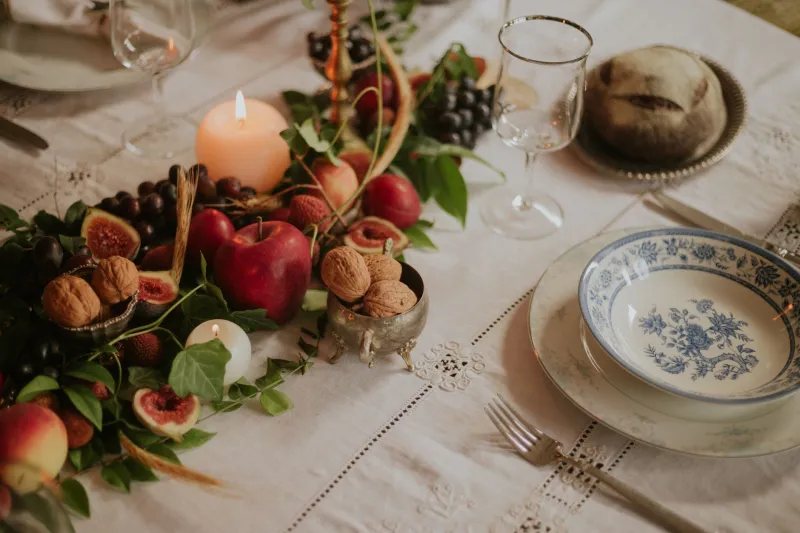
There is a particular kind of cabinet in American homes. It holds the wedding china, the monogrammed napkins, the candle that smells like a hotel lobby in the best way. It opens twice a year. Maybe.
We have been trained to believe nice things are for occasions. But occasion is a circular definition. If the good dishes only come out when guests arrive, and guests only arrive when the house is perfect, the good dishes mostly stay in the dark. Meanwhile, taste—the thing we claim to admire—is built in ordinary light.
The guest-only trap
Saving is not the same as stewardship. A candle that never burns does not stay perfect; it dries out, loses throw, and collects dust. Linen left folded for years can yellow at the crease. Cashmere goes unworn until the moths find it. The real risk is not breakage. It is never using the thing at all.
There is also a quieter cost. When we save the good stuff for guests, we tell ourselves a story about our lives: that the real version is still coming, that the current version is a rehearsal. That is a bad way to live and a worse way to decorate. A home is not a showroom with a back stockroom. It is the place where Tuesday happens.
Taste is a practice, not a purchase
You do not learn what you like by leaving it in a box. You learn by living with it. A candle burned at 7 p.m. on a Tuesday teaches you more about scent than a store display ever will. A linen napkin in your lap tells you whether the size is right, whether the weave is too rough, whether you actually enjoy ironing or just enjoy the idea of it. Daily use is feedback.
This is why the guest-only mindset often backfires. People save the good things, then discover they do not actually like them. The candle is too perfumed. The plates are too heavy. The linen wrinkles more than expected. None of that is a tragedy, but it is information—and you only get it by using the stuff.
Five rules for using the good things
1. Put one thing into rotation this week
Do not overhaul your life. Pick one object—the candle, the linen napkins, the nice serving bowl—and use it on an ordinary night. Takeout counts. Cereal counts. The point is to break the association between good things and guests.
2. Wash the linen, do not worship it
Good linen is meant to be washed. Use a gentle detergent, skip the fabric softener, and accept a few wrinkles. Ironing is optional; creases are part of the texture. If a piece cannot survive a normal wash, it is not linen. It is a prop.
3. Burn the candle all the way across
The first burn matters. Let the wax pool reach the edge so the candle does not tunnel. Trim the wick before every use. Then burn it down. A candle that is too precious to light is just wax in a jar.
4. Keep a good shelf, not a good vault
There is a difference between storing something carefully and hiding it. A shelf with the good plates within reach says these are part of the household. A vault says these are part of a fantasy. Reachable things get used.
5. Replace, do not hoard
If a glass breaks, that is data. If a plate chips, that is a Tuesday. The goal is not to preserve a museum collection; it is to build a home that can absorb real life. Buy fewer things, use them harder, and replace only what you actually miss.
What to stop saving
The candle. The cashmere. The dishes that were a wedding gift. The linen napkins you bought for a dinner party that never happened. The fancy soap in the guest bath that no guest has ever seen. None of these things become more valuable by waiting. They become background.
Start with the candle because it is the easiest. Light it while you answer emails or fold laundry. Let the scent settle into the room. Notice whether you like it. If you do, light it again tomorrow. If you do not, you have learned something about your taste—and you can stop buying candles that smell like a hotel lobby.
The guests will come eventually. The holidays will arrive. The table will be set. But the house does not need to wait until then to feel alive. Use the good plates for pasta on a Tuesday. Put the linen napkins next to the paper towels. Burn the candle down to the last inch. Taste is not a special occasion. It is what you do with the ordinary ones.