The First Ten Feet: Six Pieces That Decide What Your Home Says About You
There is a particular kind of home that photographs beautifully and feels strange to enter. You can usually diagnose it in the first ten feet: a console table too small for its wall, a mirror hung a touch too high, a bowl with nothing in it, a runner that stops short of the door. All the money is in the living room. None of the thinking is in the entryway.
That's backwards, and everyone who visits knows it. The living room is where people sit for an hour and get distracted by conversation. The entryway is where they stand for ninety seconds with nothing to do but look. It's the most-read room in the house and the least-edited one.
This isn't an argument for staging. It's the opposite. A staged entryway — the matching console-and-mirror set, the artificial olive tree, the bowl of decorative spheres — reads as a hotel lobby, and guests register it as furniture rather than as you. What you want is the small evidence of an actual life: a place to put keys, light at eye level, one object that isn't from a catalog spread.
Why the entryway gets skipped
Because it's a hallway, and hallways feel like infrastructure. Nobody lounges there, so it never gets the satisfying “finished” moment of a sofa arriving. It's also the hardest room to shop for, because it's usually narrow, poorly lit, and missing an outlet exactly where you need one. So it accumulates: shoes, mail, a tote bag, a dog leash on a hook that was supposed to be temporary in 2021.
The fix isn't a bigger budget. It's a checklist.
The six-piece audit
1. A landing surface, correctly scaled
A console or slim table roughly 30 to 34 inches high, 12 to 14 inches deep, and long enough to occupy somewhere between half and two-thirds of the wall. Too short and the wall looks borrowed; too long and the room feels like a corridor with a desk in it.
Budget directions: Threshold and Target do a solid narrow console under $150; Article and CB2 sit in the $400–$700 range with better joinery; a vintage console or a small dresser from an estate sale is often cheaper than new and considerably more interesting.
2. Light that isn't overhead
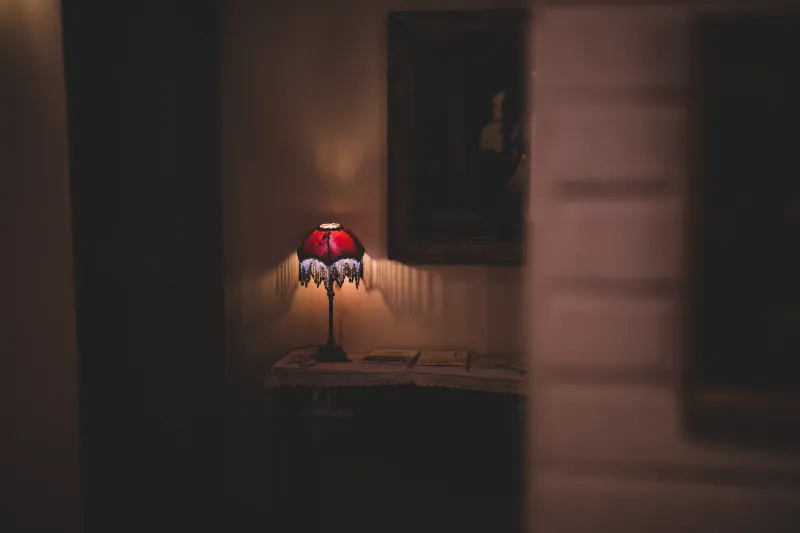
If the only light in your entryway is a flush-mount ceiling fixture, that's the whole problem. Overhead lighting flattens faces and makes every surface look like a rental. Add one warm source at table or eye level — a small table lamp, a plug-in sconce, a picture light — with a bulb no cooler than 2700K and on a dimmer if you can manage it.
Budget directions: Schoolhouse and Rejuvenation for a lamp you'll keep for a decade; IKEA's cordless rechargeable lamps solve the no-outlet problem for under $40.
3. A place for the body
This is the utility piece, and it's the one people skip. A bench, a stool, a low stool with a cushion. Somewhere to sit and pull on a boot, set down a bag, or wait thirty seconds for someone to find their coat. If there's no floor space, a row of two or three substantial hooks at shoulder height does the same job more quietly than a coat rack.
Budget directions: A simple wooden stool from a thrift store, a woven bench from West Elm, or a wall-mounted oak peg rail from Etsy — many makers sell them in custom lengths.
4. One thing that's just yours
Not a gallery wall. One object, one small work on paper, one bowl made by someone whose name you know. This is the piece that separates a considered entry from a furnished one, and it should be the last thing you buy, not the first — because it needs to be a real preference rather than a gap you filled.
Budget directions: Framed original works on paper from online estate auctions often run $50–$200; a hand-thrown bowl from a local studio or Etsy is $30–$80 and does more than any decorative object from a big-box shelf.
5. Something soft or alive
Tile and hardwood are unforgiving. A runner, a small jute or wool rug, a woven basket, or one plant that tolerates low light — a snake plant, a zz plant, a pothos on a high shelf. One is enough. The point is a change in material under foot or at the edge of vision.
Budget directions: Ruggable and Revival for washable runners; Nordic Knots and Lulu and Georgia when you want a runner you'll actually notice; a $20 nursery plant in a $15 terracotta pot.
6. Deliberate empty space
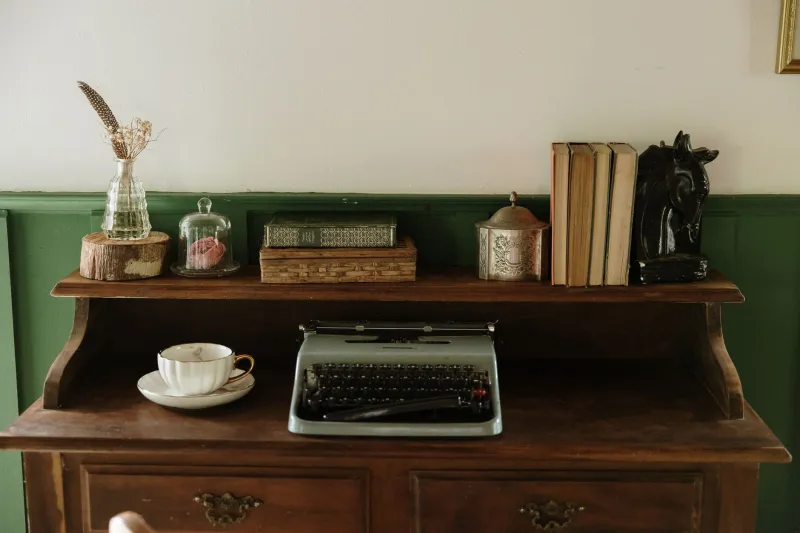
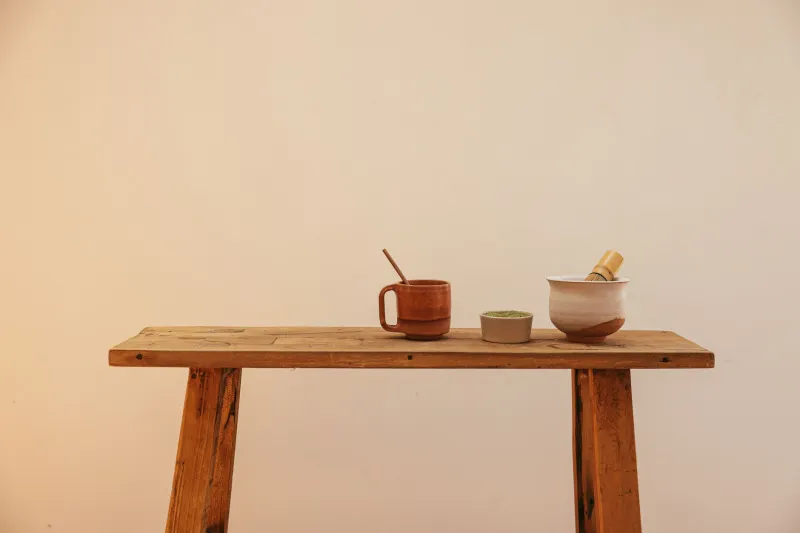
This is the hardest piece on the list and the most important. Negative space is what tells the eye that someone made a decision instead of running out of room. If the console is covered end to end, nothing on it registers. Aim for roughly a third of the surface to stay empty — and that includes the floor beneath it, which should not become the shoe pile's permanent home.
Where people go wrong
- Buying the set. Console, mirror, and matching bench from the same collection reads as a showroom.
- Hanging the mirror too high. Center it closer to eye level than instinct suggests; most entry mirrors float six inches above where they should be.
- A rug that's too small. A runner should run nearly the length of the hall, with a few inches of floor showing on each side. A postage-stamp rug makes a space look smaller, not warmer.
- Gallery walls, too fast. Three frames on the first weekend is how hallways become clutter with hooks.
- Ignoring the return sightline. The entryway is also the view from inside the house looking out. Stand in your living room and check what you see.
The ten-foot walk-through
Before you buy anything, do this: walk in the front door with a bag in each hand and your coat still on. Where does everything go? If the answer involves a chair in another room, you've found your first purchase.
Then stand at the threshold and look at the first ten feet for a full thirty seconds. Most people find three things they'd remove before they find one thing they'd add. That's usually the whole project — not a shopping list, just a decision to stop treating the most-seen square footage in the house as a place to drop things on the way to somewhere better.